VERSIONS

PhotoSpinner: A History Through its Versions

PhotoSpinner has undergone several design iterations, each adding capabilities that enhance reproducibility, user control, and overall performance. The following table presents a visual timeline of these versions along with their key features, allowing a clear comparison of the technological progress behind the platform.

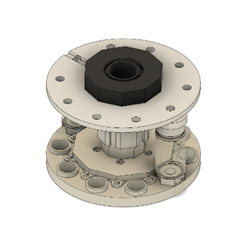
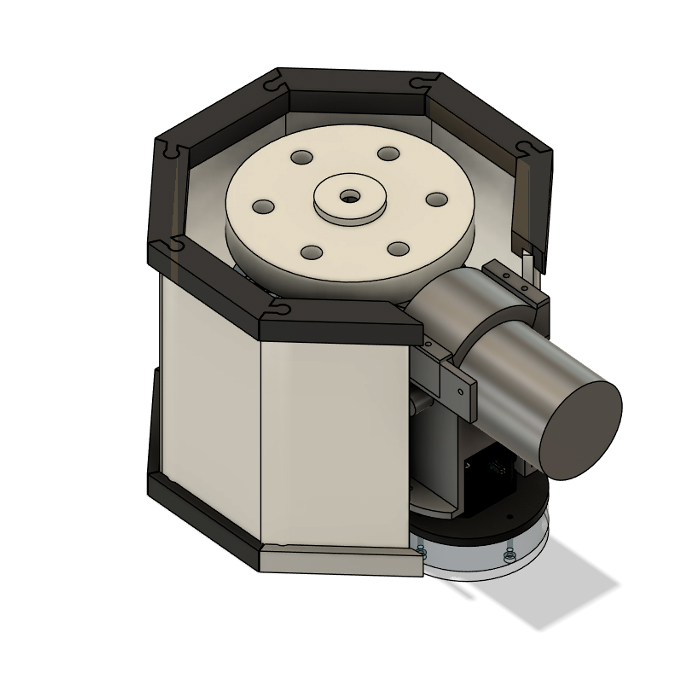
Foundational Prototype (v0)

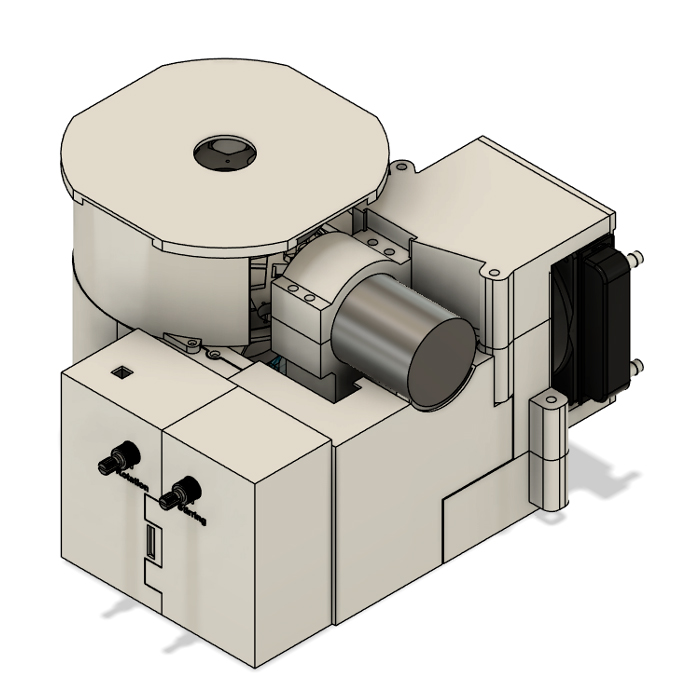
This early prototype captured the core idea behind PhotoSpinner: an axially symmetric platform for multi-sample illumination. It incorporated a small cooling fan, a simple pseudo-shield, and magnetic stirring driven by micromotors. Though rudimentary, it demonstrated the feasibility of synchronized stirring and symmetric irradiation, setting the foundation for all subsequent versions.

Prototype v1 - First Fully Enclosed System

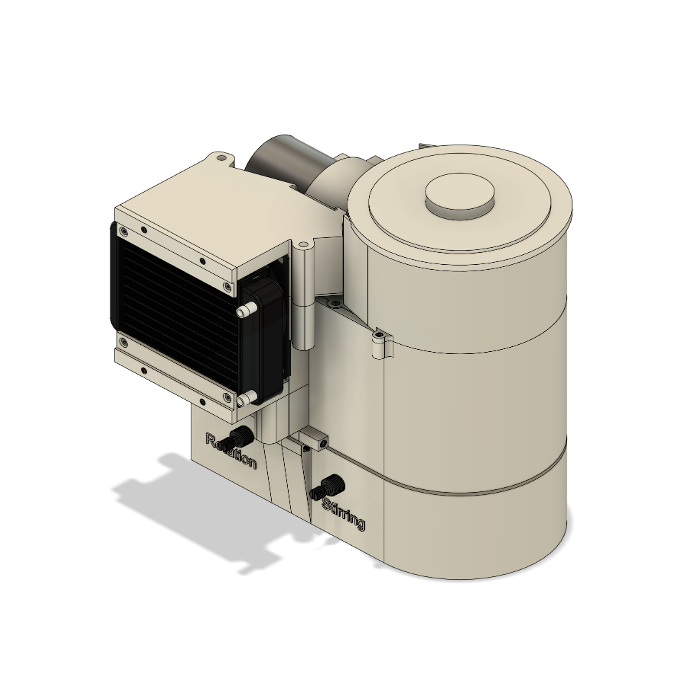
This version introduced full control over sample rotation. A large cooling fan significantly improved thermal management, with the added option to pre-cool the forced airflow using an external chiller, marking the first step toward temperature conditioning. The design also incorporated a fully enclosed housing, improving safety, light shielding, and overall system robustness.

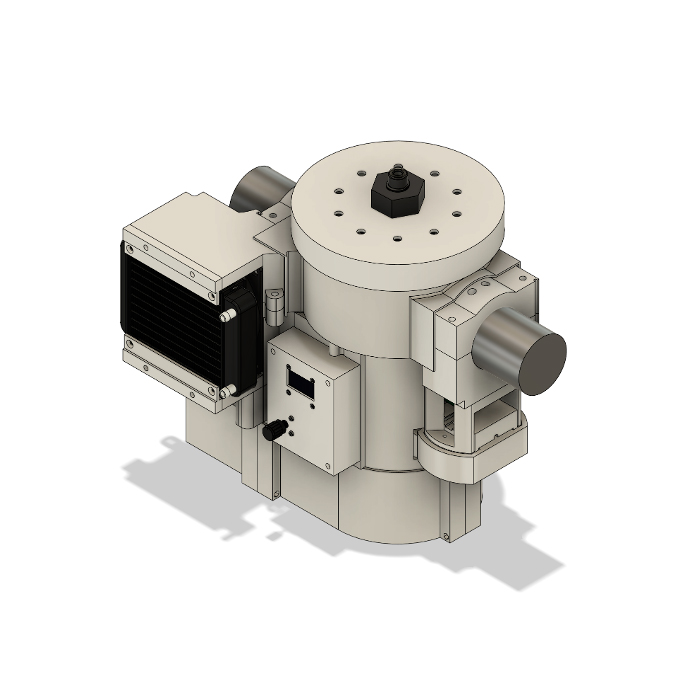
Prototype v1.1 - Refined and Optimized Design

Version 1.1 introduced a more polished and ergonomic enclosure, improving both usability and internal airflow. The layout was streamlined to reduce unnecessary volume while enhancing access to key components. This iteration also incorporated upgraded electronics, offering greater reliability, smoother control of rotation and stirring functions, and a more stable thermal management system.

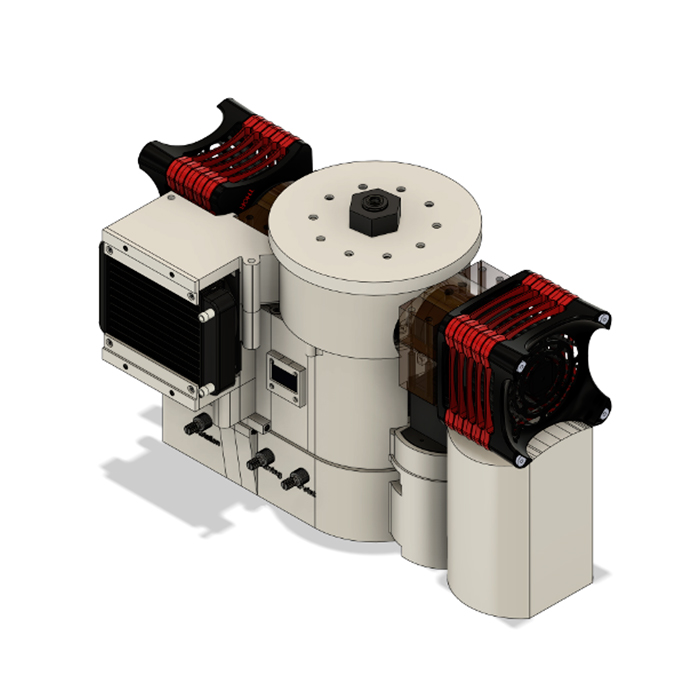
Prototype v1.1.2 - Expanded Sample Capacity and Dual-Lamp Design

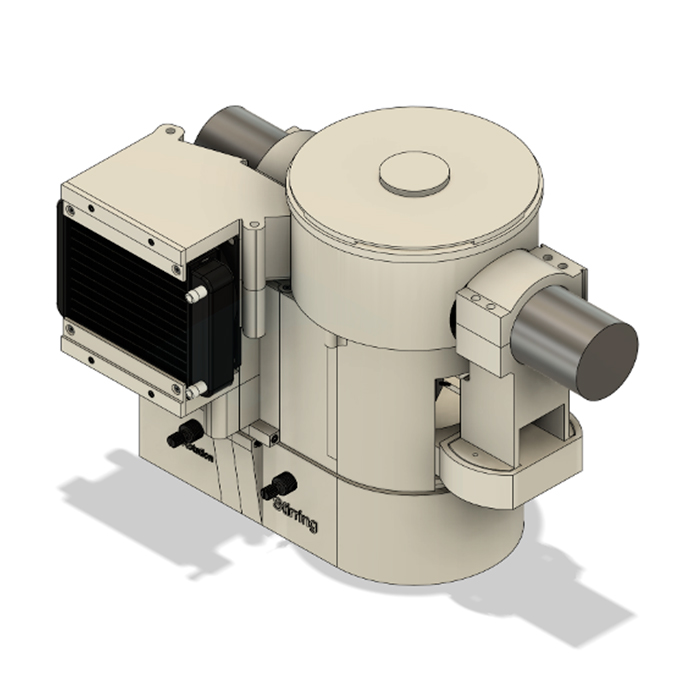
Developed in response to user feedback, version 1.1.2 introduced a larger sample chamber, allowing the use of taller vials and more diverse experimental configurations. This iteration also incorporated a dual-lamp setup, enabling higher photon flux or mixed-wavelength illumination within the same experiment. These upgrades significantly broadened the range of photochemical conditions achievable while maintaining the system’s axial-symmetry architecture.

Prototype v1.2 - Temperature Control and Interface Upgrade

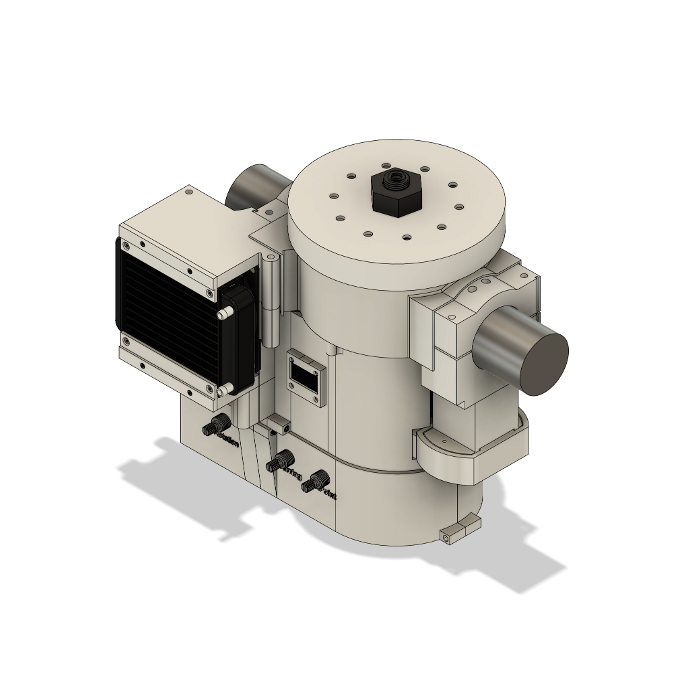
Version 1.2 marked a major step toward user interaction and thermal precision. It introduced a front LCD display for real-time monitoring, along with an additional potentiometer dedicated to temperature regulation. A redesigned electronic system enabled active temperature control, improving reproducibility across long irradiation times.
This version also introduced a revolver-style sample holder, which not only improved vial alignment and mechanical stability but also made sample exchange much easier and faster for the user—greatly enhancing day-to-day usability.

Prototype v1.2T - Adapted for Thorlabs Solis Lamps

Developed in response to user requests, version 1.2T introduced full compatibility with Thorlabs Solis lamps, incorporating dedicated mounting brackets. This adaptation significantly broadened the platform’s applicability. Although tailored here for Solis modules, the same design philosophy has enabled the creation of variants compatible with other illumination systems -such as the G2V optics Pico solar simulator-.

Prototype v1.3 - Electronics Overhaul and Menu Control

Version 1.3 introduced a major electronics upgrade, replacing the traditional potentiometers with a menu-based control system for more intuitive navigation and finer parameter adjustment. The addition of an inductive sensor enabled accurate positioning and made step-wise reaction mode possible, while a second CPU improved distributed control and overall responsiveness. The stirring system was strengthened with more robust motors, increasing durability during long experiments. Externally, only minimal housing changes were needed, as most improvements focused on internal control architecture and stability.

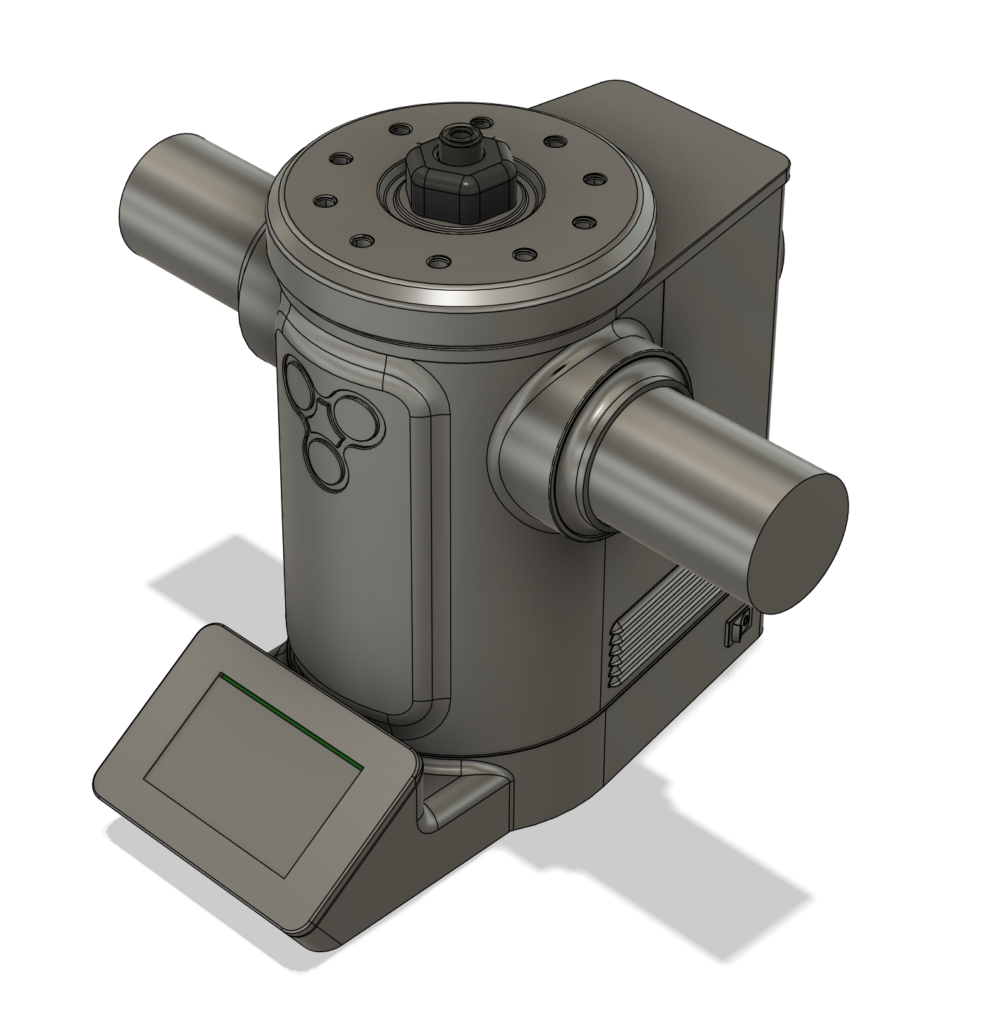
Prototype v2.0 - Modern Design and Touch Interface

Version 2.0 integrates all previous improvements while introducing a full touch-screen interface and a more modern, streamlined design. It also features a more robust housing, offering increased durability, improved ergonomics, and a polished appearance. This marks the most advanced and user-friendly iteration of PhotoSpinner to date.

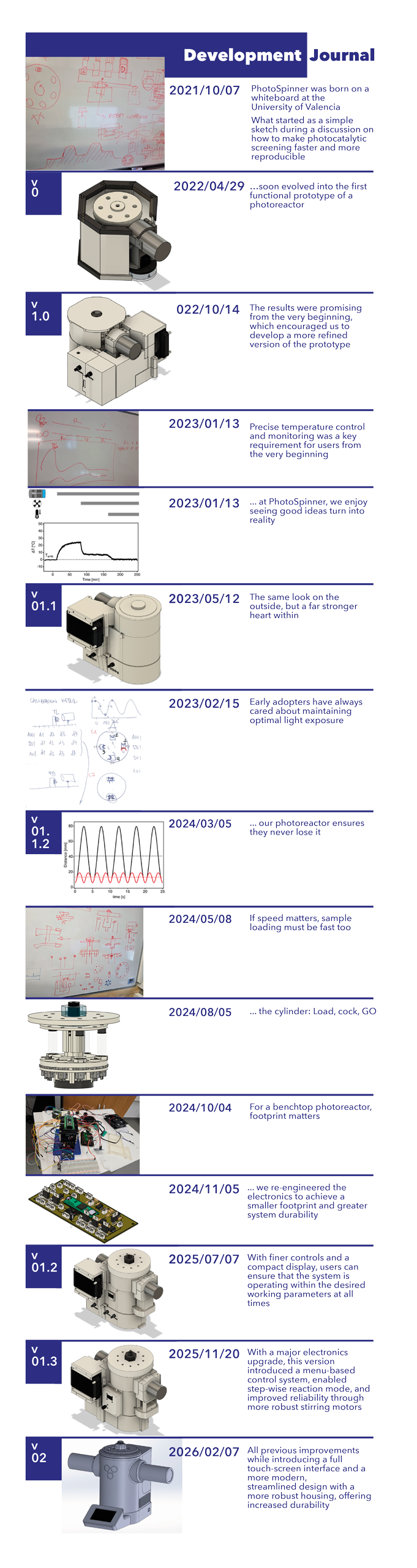
PhotoSpinner: A Development Journey

PhotoSpinner has come a long way – from a whiteboard sketch to a fully engineered photoreactor designed for modern laboratories. Each iteration refined performance, usability, and precision, driven by real user feedback. This timeline showcases the key milestones that shaped its evolution into a reliable, high-throughput platform. Today, PhotoSpinner combines robust engineering with intuitive control to deliver unmatched reproducibility in photochemical screening.